
- Empty cart.
- Continue Shopping
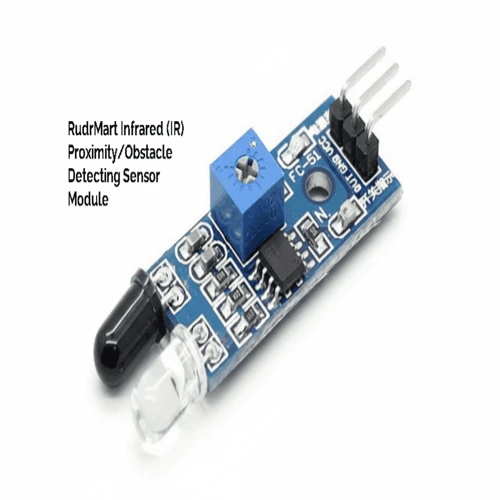
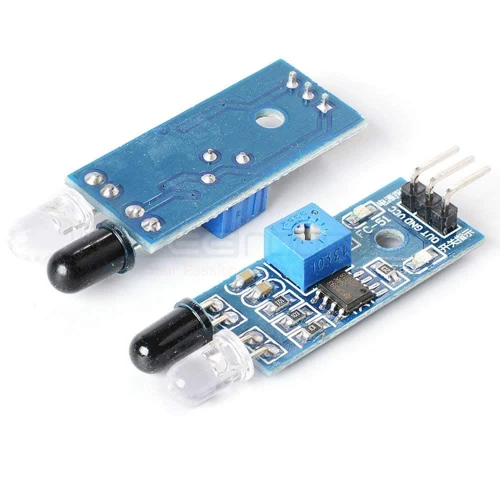
Infrared IR Proximity Sensor Module
₹176.00Current price is: ₹176.00. Original price was: ₹197.00.
7 in stock
Add to cart
Buy Now

Infrared IR Proximity Sensor Module
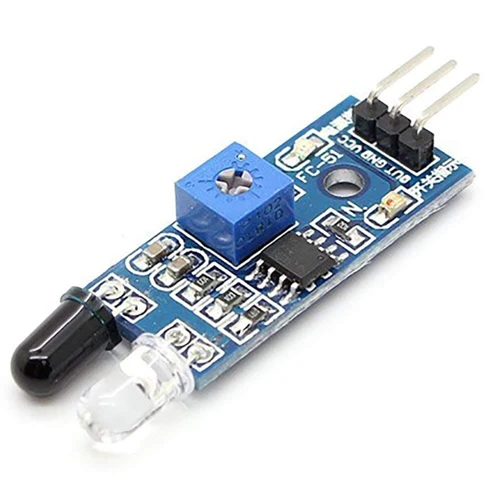
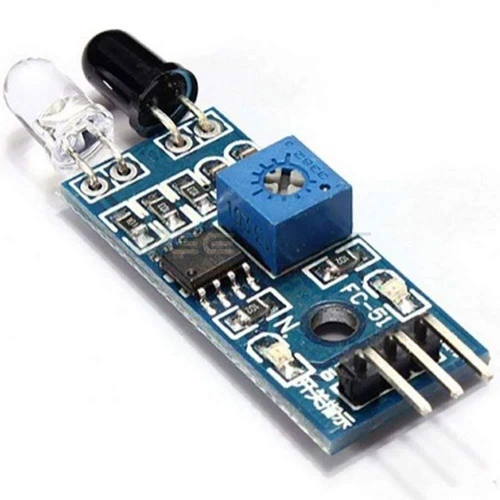
The Infrared IR Proximity Sensor Module is a compact and efficient obstacle detection sensor designed for robotics, automation systems, and IoT applications. It uses an infrared transmitter and receiver pair along with an LM393 voltage comparator to provide fast and reliable digital output.
This sensor is widely used in Arduino-based projects, ESP8266 and ESP32 IoT systems, and educational robotics applications. It is suitable for students, developers, and engineers working on smart automation systems.
The module detects objects using reflected infrared signals and converts them into a stable digital output, making it easy to integrate into microcontroller projects without complex programming or signal processing.
How Infrared Proximity Detection Works
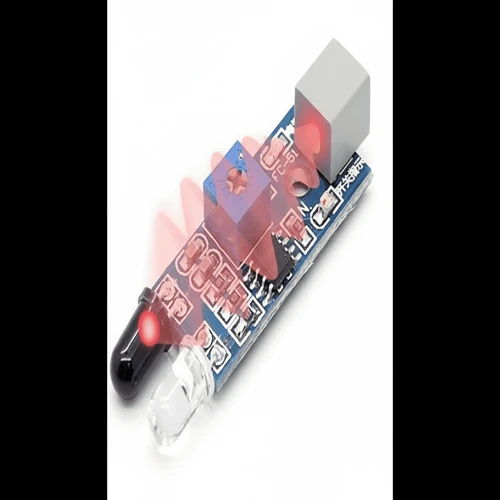
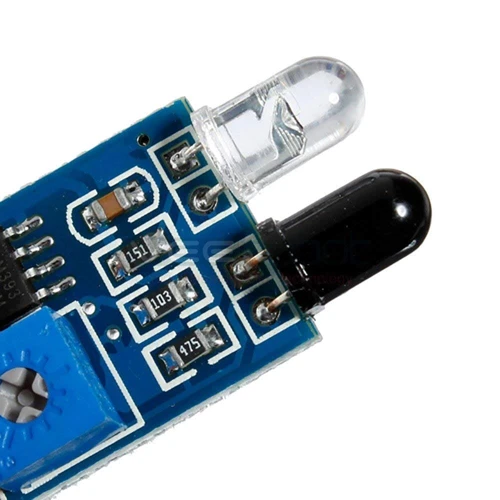
The module operates using infrared reflection technology. The IR LED emits infrared light, which reflects when it hits an object. The reflected signal is received by a photodiode, and the onboard LM393 comparator converts this analog variation into a stable digital output signal.
This design ensures accurate detection even in varying ambient light conditions and reduces false triggering in real-world applications.
External reference:
https://en.wikipedia.org/wiki/Infrared
https://en.wikipedia.org/wiki/Proximity_sensor
https://www.ti.com/product/LM393
Key Features
Adjustable Detection Range
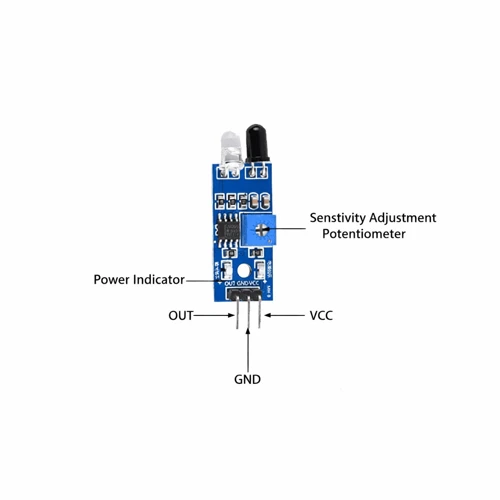
The module includes a built-in potentiometer that allows adjustment of detection distance from approximately 2 cm to 30 cm.
Stable Digital Output
Provides a clean and reliable active-low digital signal suitable for microcontroller applications.
Dual LED Indicators
Power LED indicates operation status, while output LED indicates object detection.
Compact Design
Small PCB size allows easy integration into robotics and embedded systems.
Low Power Operation
Designed for energy-efficient applications in battery-powered and IoT systems.
Pin Configuration
- VCC: 3.3V to 5V power input
- GND: Ground connection
- OUT: Digital output (active low when object is detected)
The module is compatible with most microcontrollers without additional components.
Compatibility with Microcontrollers
Arduino Boards
The sensor integrates easily with Arduino Uno, Nano, and Mega boards. It is commonly used in obstacle avoidance robots, smart vehicles, and automation systems.
Official Arduino documentation:
https://www.arduino.cc/reference/en/
ESP8266 and ESP32
The module is fully compatible with WiFi-enabled microcontrollers for IoT applications such as smart home automation, remote monitoring, and wireless detection systems.
ESP8266 reference:
https://en.wikipedia.org/wiki/ESP8266
Raspberry Pi Pico
The sensor can also be used with Raspberry Pi Pico and other ARM-based microcontrollers for advanced embedded systems and industrial automation projects.
Raspberry Pi documentation:
https://www.raspberrypi.com/documentation/
| Weight | 0.65 kg |
|---|---|
| Dimensions | 10 × 2 × 2.7 cm |

Reviews
There are no reviews yet.