
HC-SR04 Ultrasonic Sensor Module
₹236.00Current price is: ₹236.00. Original price was: ₹660.00.
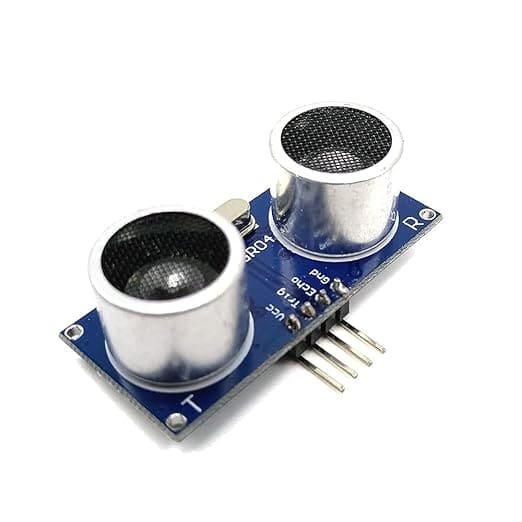
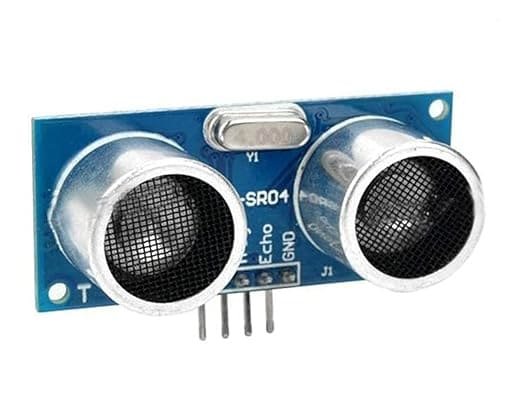
HC-SR04 Ultrasonic Sensor Module
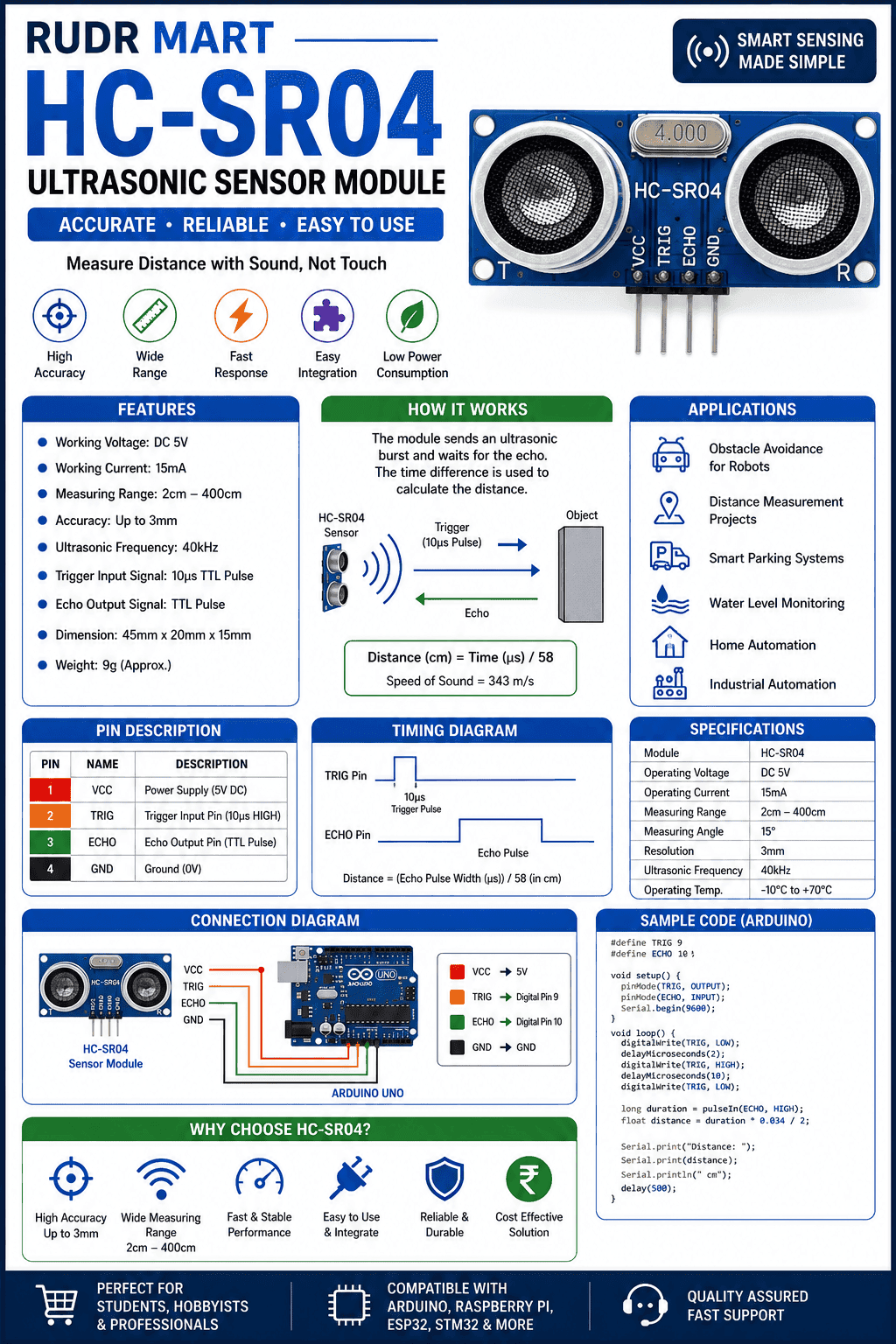
Give your robotics, automation, and IoT projects the ability to “see” and map their surroundings with precision. The HC-SR04 Ultrasonic Sensor Module offers highly accurate, reliable, and cost-effective non-contact distance measurement ranging from 2cm to 400cm.
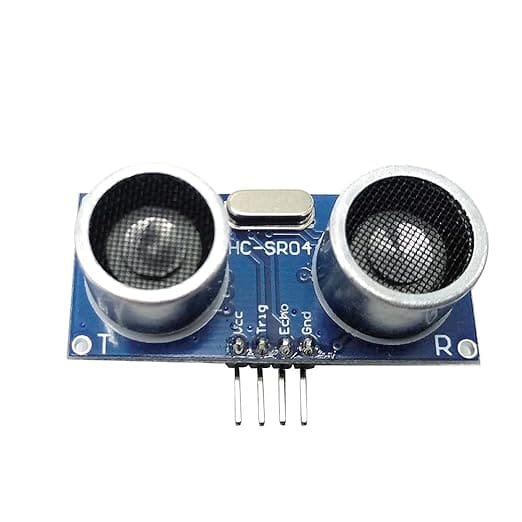
Operating like a compact sonar system, this versatile module calculates distances using sonic time-of-flight, making it completely unaffected by ambient room lighting or darkness. Featuring a simple 4-pin breakout layout (VCC, Trig, Echo, GND), it integrates effortlessly with Arduino, Raspberry Pi, ESP32, and other standard microcontrollers. Perfect for autonomous obstacle avoidance, fluid-level tracking, and contactless smart systems!
10 in stock

You may also like…
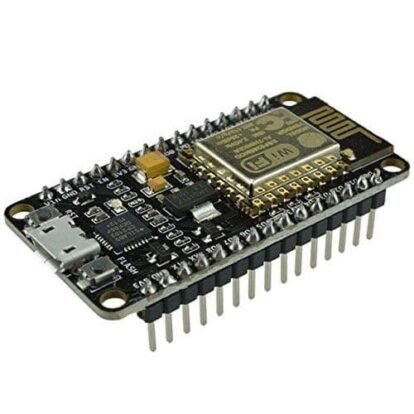
ESP8266 NodeMCU WiFi Development Board (CP2102)
₹385.00Current price is: ₹385.00. Original price was: ₹699.00.Sale!Hot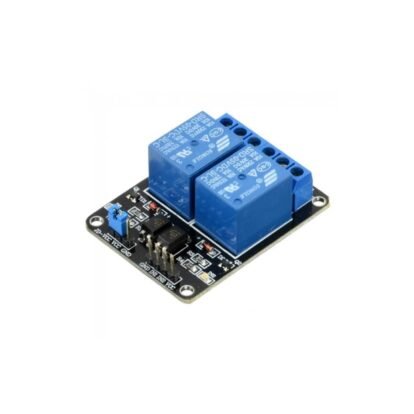
2 Channel 5V Relay Module Board with Optocoupler Isolation
₹223.00Current price is: ₹223.00. Original price was: ₹349.00.Sale!Hot
Male to Male Jumper Wires 40 Pin Dupont Cable
₹201.00Current price is: ₹201.00. Original price was: ₹365.00.Sale!
HC-SR04 Ultrasonic Sensor Module
HC-SR04 Ultrasonic Sensor Module: High-Performance Wireless Distance Measurement
The HC-SR04 Ultrasonic Sensor Module is an indispensable component for makers, engineers, robotics enthusiasts, and electronics hobbyists worldwide. If you are looking to give your hardware projects the ability to “see” and map their surroundings, this high-performance sensor provides an exceptionally accurate, cost-effective, and reliable non-contact distance measurement solution.
Operating like a compact, embedded sonar system, the module bridges the gap between raw physics and digital automation. Whether you are constructing an autonomous obstacle-avoiding rover, designing a smart contactless parking guide, or developing complex IoT fluid-level monitoring applications, this versatile sensor brings precision tracking straight to your microcontrollers.
Key Features of the HC-SR04 Ultrasonic Sensor Module
When selecting hardware for embedded electronics, precision and ease of integration are crucial. The HC-SR04 Ultrasonic Sensor Module stands out in the industry due to its robust design and user-friendly communication profile:
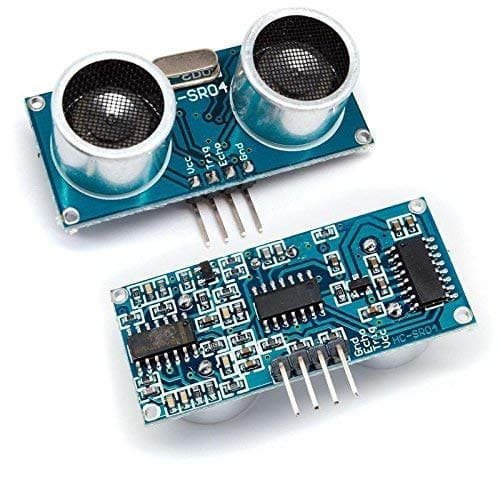
- Dual-Transducer Architecture: Equipped with a dedicated ultrasonic transmitter and receiver, the module handles dual signal processing seamlessly for reliable distance tracking.
- Broad Detection Coverage: Delivers stable, precise distance readings ranging from 2cm up to 400cm ($2\text{ cm}$ to $4\text{ m}$), making it perfect for both short-range detection and wider spatial awareness.
- High-Accuracy Crystal Oscillator: Integrated with a built-in 4MHz crystal oscillator, ensuring stable clock speeds, consistent pulse timing, and highly reproducible measurement results.
- Simple 4-Pin Interface: Features fully accessible breakout pins for VCC, Trigger, Echo, and GND, keeping your breadboard layouts clean and minimizing prototyping wiring errors.
- Ultra-Low Static Current: Optimized for energy efficiency, drawing less than $2\text{ mA}$ during standby, making it an excellent choice for battery-powered automation or mobile robotics
Technical Specifications
Understanding the absolute electrical and physical parameters ensures long-term system stability. Below are the core technical specifications for the module:
| Parameter | Specification |
| Operating Voltage | DC 5V |
| Operating Current | 15mA |
| Quiescent Current | < 2mA. |
| Measuring Angle | 15 degrees |
| Ranging Distance | 2cm – 400cm |
| Resolution/Accuracy | Up to 3mm |
| Trigger Input Signal | 10µS TTL pulse |
| Echo Output Signal | TTL PWL signal (proportional to distance) |
| Dimension | 45mm x 20mm x 15mm |
Enhancing Robotics and IoT Automation Projects
The HC-SR04 Ultrasonic Sensor Module is uniquely optimized for robotics projects and smart automations. In traditional robotics layouts, spatial mapping often requires complex infrared arrays or heavy, expensive LiDAR setups. By utilizing this ultrasonic transceiver, your autonomous hardware can effortlessly detect walls, furniture, or approaching obstacles on the fly.
Because it calculates distance based on the time-of-flight of sound waves rather than light intensity, the sensor is completely unaffected by ambient room lighting, darkness, or the color of the target surface. This makes it an incredibly reliable choice for streaming real-time telemetry back to an asset dashboard or sending immediate stop/turn commands directly to motor drivers.
Understanding the Sonic Time-of-Flight Formula
One of the greatest benefits of implementing the HC-SR04 Ultrasonic Sensor Module is the simple, transparent physics behind its operation. The module measures distance by emitting an ultrasonic burst at a frequency of 40KHz and calculating how long it takes for that sound wave to bounce back to the receiver.
To turn the time duration into an actual physical metric inside your code, you utilize the fundamental speed of sound equation. Since the sound wave travels to the object and back, the total distance is calculated using half of the elapsed time:
When programming standard 8-bit microcontrollers, this formula is typically simplified for speed and processing efficiency into standard metric or imperial units:
Distance in inches = Echo Pulse Time in microseconds / 148
Seamless Microcontroller Integration & Setup
Whether you are working with an Arduino Uno, Nano, Mega, Raspberry Pi Pico, ESP32, or standard STM32 development boards, connecting this module is incredibly straightforward. It requires just two digital I/O pins to function fully.
Quick Wiring and Integration Guide:
- VCC: Connect to a stable 5V power supply line.
- GND: Connect to the common system ground.
- Trigger (Trig): Connect to a digital output pin. Send a short 10-microsecond high pulse to initiate a sonic burst.
- Echo: Connect to a digital input pin. Use a pulse-timing function to read the duration of the incoming high signal, then apply the conversion formula to determine the exact distance.
Reviews
There are no reviews yet.